Build the branding into the set
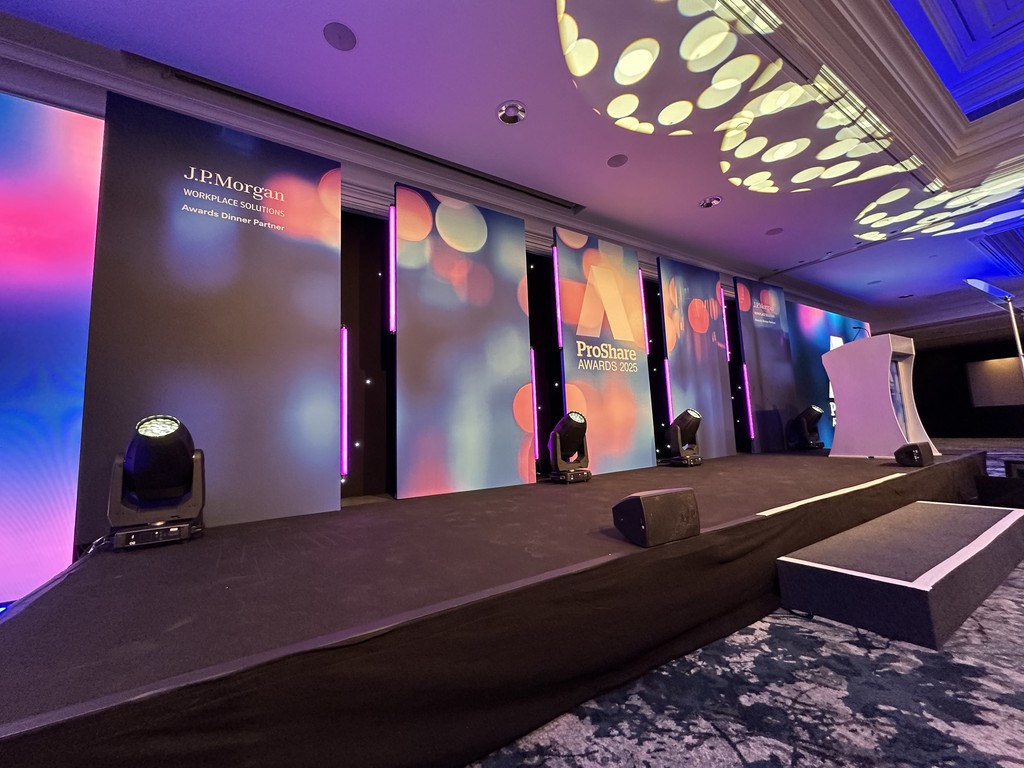
Branding does not need to mean placing a logo in the middle of a flat wall. Colours, shapes, materials, lighting and physical structures can all make an event recognisable before the audience has even read a company name.
For conferences and awards, it is often useful to keep part of the branding permanently visible while screens change between presentations, videos and sponsor content.
Custom printed panels, dimensional lettering and scenic fabrication are particularly useful when the backdrop needs to feel like part of a wider event identity rather than simply a display surface.
Use an LED wall as the main canvas
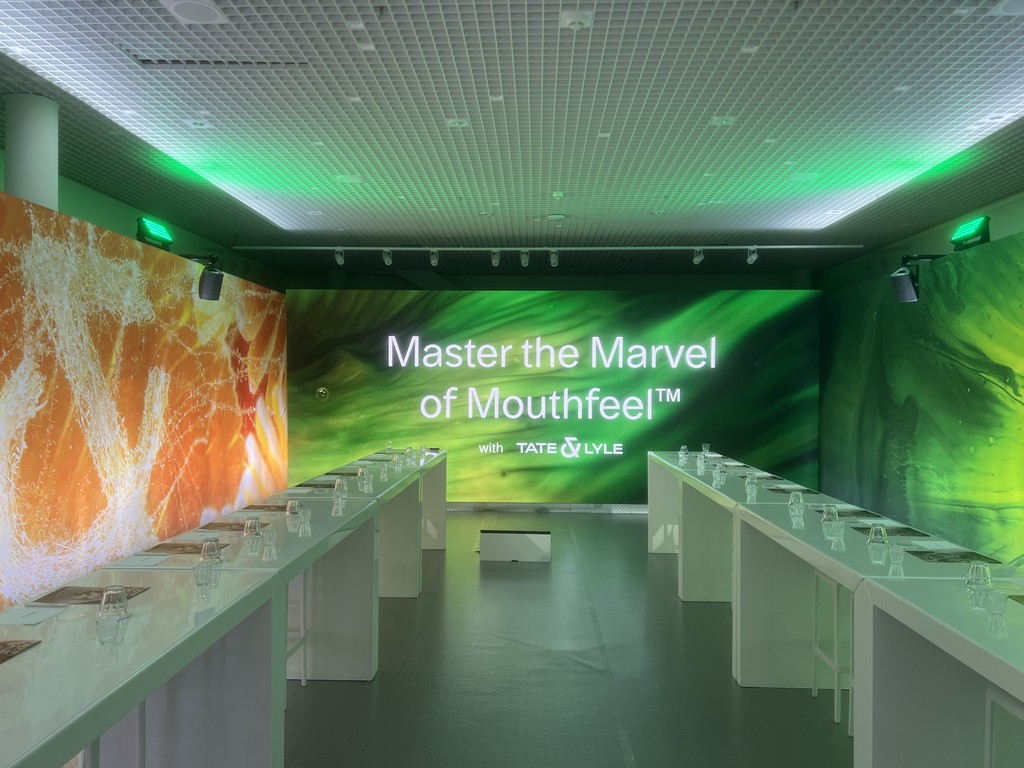
LED walls are one of the most flexible options for corporate stages because the whole backdrop can change throughout the event.
A single screen can move between presentation slides, animated branding, video playback, speaker graphics, holding slides and awards content without physically changing the set.
LED is also bright enough to remain visually strong under stage lighting and can be built in a wide range of sizes and shapes.
The important part is designing the screen around the room and viewing distance rather than simply making it as large as possible.
Combine screens with scenic fabrication
A screen does not have to become the entire backdrop.
Some of the most effective corporate stages combine digital content with physical scenery. Timber finishes, printed panels, textured materials and architectural features can soften the appearance of a large video system and make the whole stage feel more considered.
Screens can also be recessed or integrated into a scenic structure so they feel like part of the design.
Consider projection where it suits the room
Projection can still be a very effective solution, particularly where there is a large surface to cover or where installing an LED wall is impractical.
It can be used for straightforward presentation screens or for more creative techniques such as projection mapping.
The main considerations are ambient light, projection distance, sightlines and the available surface. A bright room with limited projector positions may favour an LED wall, while a controlled environment can make projection extremely effective.